

Investing in Green Stormwater Infrastructure in DC
In Washington, DC, Earth Economics, DC Green Bank, and Green Compass are collaborating to strengthen the green infrastructure landscape, by quantifying the full value of nature-based solutions. Green stormwater infrastructure (GSI) helps to reduce flooding and extreme heat, while improving water quality. All are critical factors in the District, especially for disproportionately vulnerable neighborhoods.

Green banks are mission-driven financial institutions that invest in projects that advance resilience and energy efficiency development. DC Green Bank loans money to developers like Green Compass, who partner with landowners to design, install, and maintain raingardens, bioretention features, and trees. Developers are able to recoup project costs through the Stormwater Retention Credit (SRC) trading program that compensates landowners and developers for reducing stormwater runoff.
In 2024, Earth Economics demonstrated that Green Compass projects provided substantial returns to the community, largely in the form of nonmarket ecosystem service benefits. Seven sites generated an estimated $1.3M in annual community benefits, the equivalent of $7.80 in value for every dollar invested.
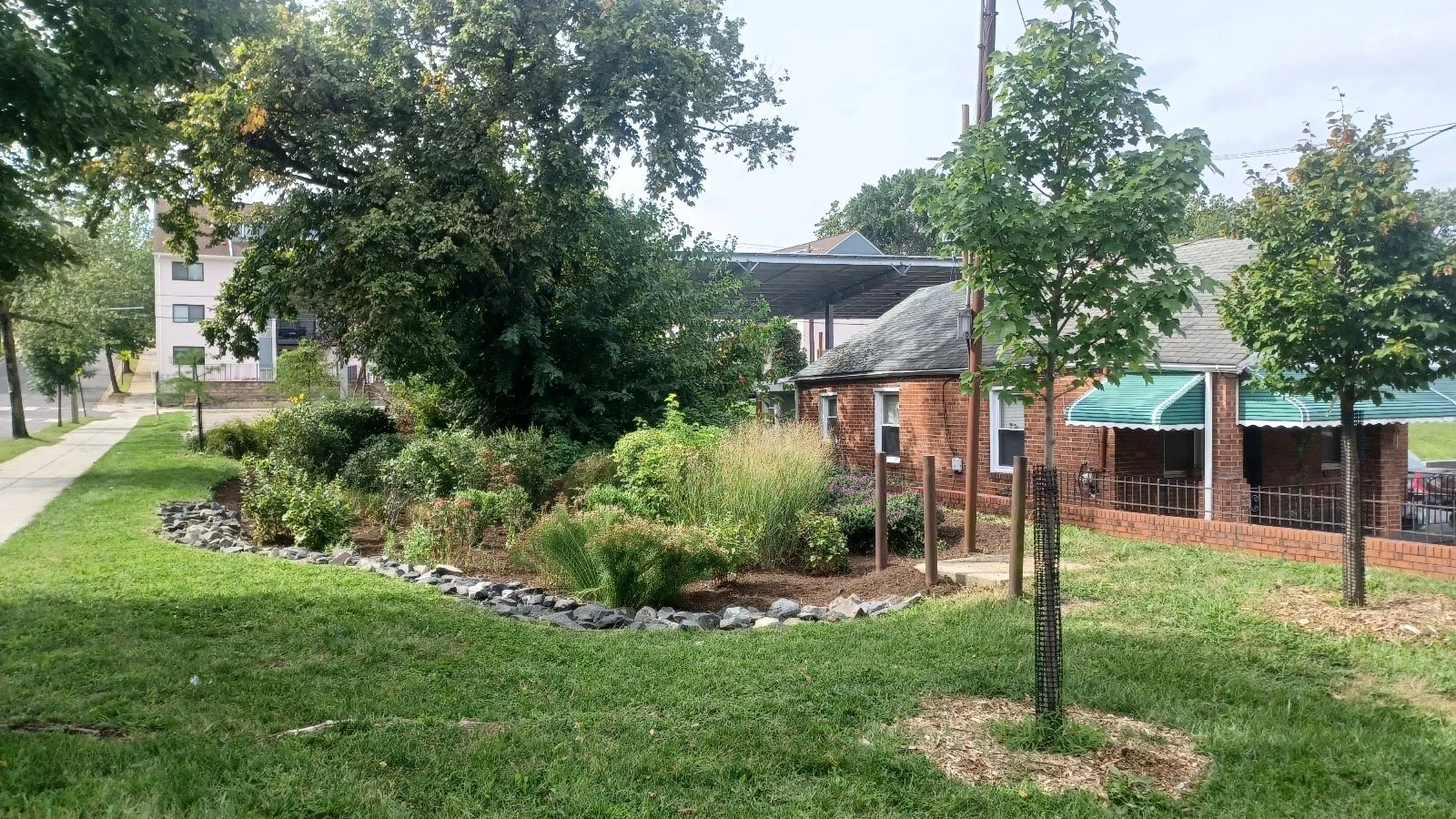
A green stormwater project at a church in Washington, DC. Provided by Green Compass.
In 2025, Earth Economics developed a Nature-Based Solutions (NBS) Metric Framework and Benefit-Cost Calculator for DC Green Bank. The framework identified quantifiable ecosystem services benefits generated by urban green infrastructure, and the calculator estimates their economic value, focusing on heat mitigation, carbon sequestration, air quality, utility savings, and health benefits. The calculator also incorporates cost data from developers, District agencies, and community partners to produce a full benefit-cost analyses to support the DC Green Bank’s impact reporting and investment decisions.
Identifying the economic value of co-benefits strengthens the investment case for GSI projects across DC Green Bank’s portfolio to stimulate and accelerate the District’s SRC program. This collaboration supports more informed investment, expands equitable GSI deployment, and helps the District meet pressing climate, flooding, and public health challenges through cost-effective, nature-driven strategies.