Restoring a Watershed: Conservation in the Elwha
The Lower Elwha Watershed is an ecological and cultural treasure stewarded by the Lower Elwha Klallam Tribe (Nəxʷsƛ̓áy̓əm, meaning "the Strong People"). This Pacific Northwest watershed supports rare and endangered species—including recovering salmon runs—and landscapes that draw recreationists, researchers, and conservationists from around the world.
Building on decades of investment in dam removal and watershed restoration, Washington State is evaluating new long-term conservation protections on thousands of acres of state-managed lands in the Lower Elwha basin.
To support a better understanding of the value at stake, we worked with the Center for Responsible Forestry and the Earth Law Center to analyze and articulate the ecological, cultural, recreational, and economic benefits the Lower Elwha Watershed provides.
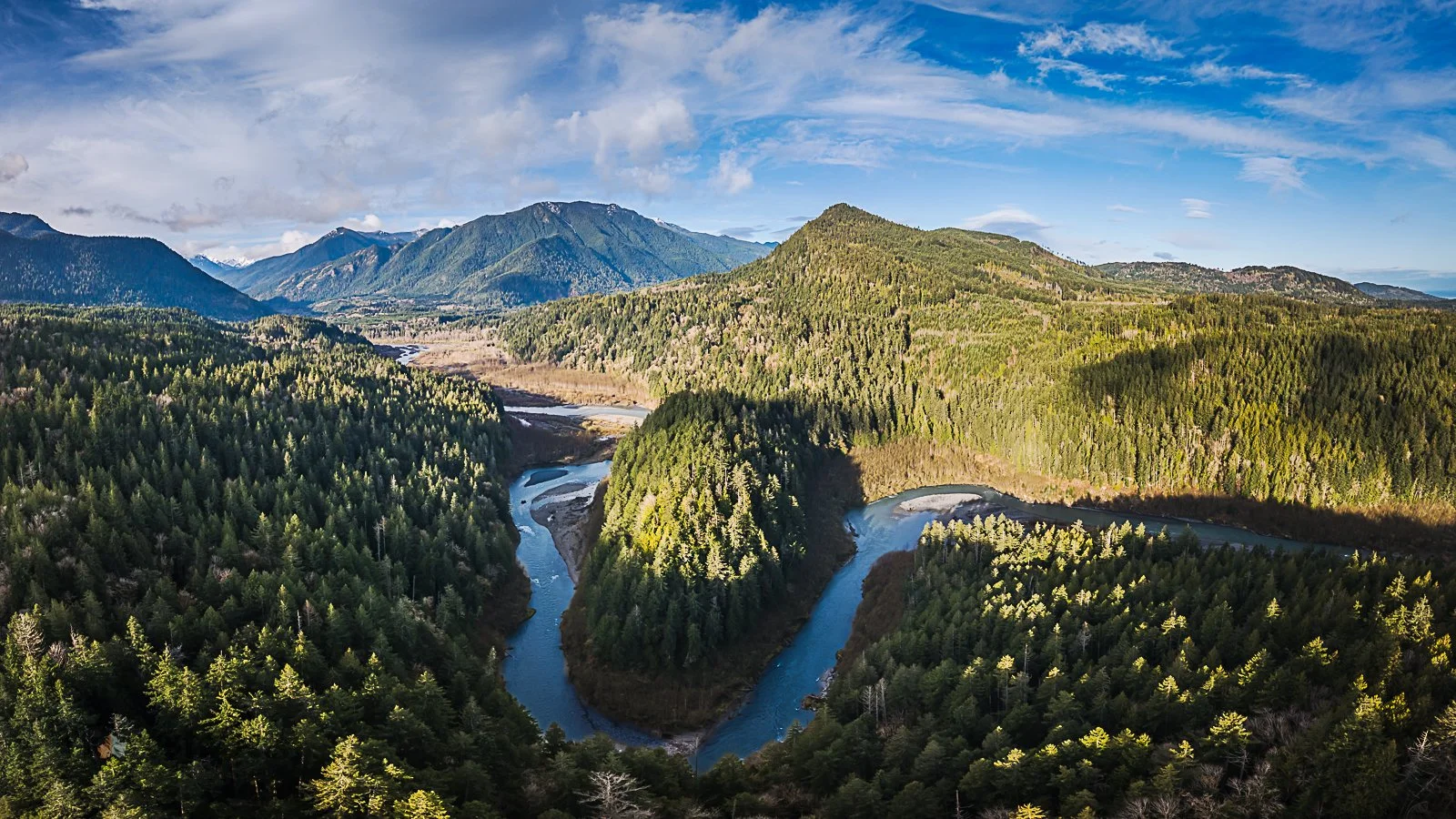
Photo courtesy of Scott McGee / Forest2Sea.com
The question: where to expand protections
In 2025, the Washington State Legislature directed the state’ Department of Natural Resources (DNR) to identify state-managed lands in the Lower Elwha Watershed for long-term conservation. To inform this decision, we collaborated with local partners to develop a watershed-scale analysis of the region’s many economic and ecological benefits.
The final report (available below) includes an ecosystem service valuation and other conservation considerations, along with findings from rare plant surveys, an evaluation of structurally complex forests, and revenue replacement considerations. The report was delivered to DNR in August 2026 to support their end of the year review.
Key findings: prioritizing structurally complex forests and key habitat
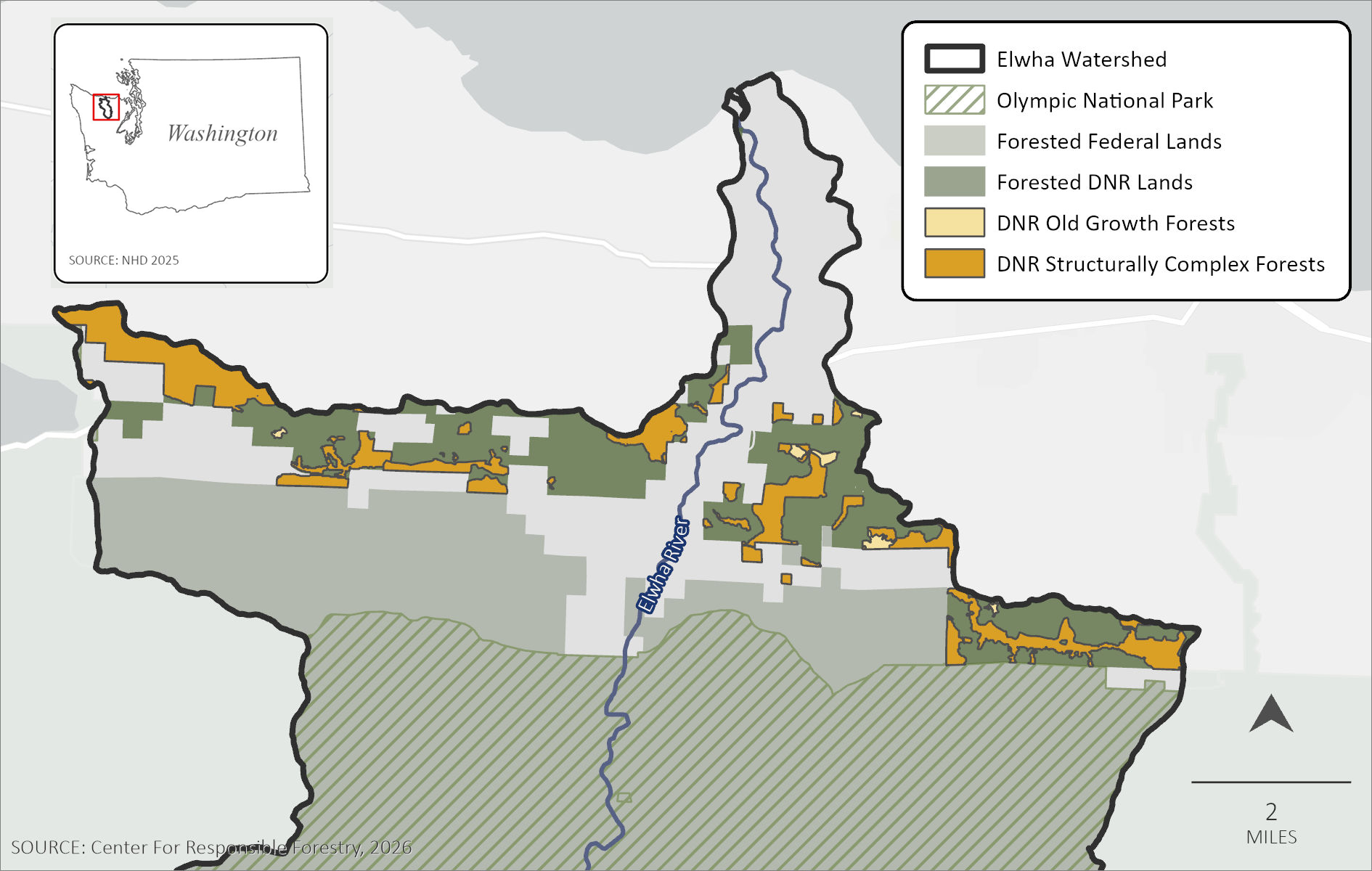
Old Growth and Structurally Complex Forests across the Lower Elwha
Among its many recommendations, the report highlights the great value of structurally complex forests. With layered canopies, standing and downed wood, extensive root systems, and healthy understory conditions, these forests provide irreplaceable ecological benefits that have tangible economic value.
Protecting these mature forests would generate an additional $367.5 million in ecosystem service benefits, including:
Carbon storage and sequestration
Drinking water protection
Salmon habitat and watershed health
Opportunities for outdoor recreation
Flood and erosion reduction
Habitat for rare and endangered species
The study documented significant conservation benefits across the watershed, including more than 7,300 acres of DNR-managed lands, rare ecological communities, culturally significant landscapes, and newly documented populations of rare plants, lichens, and the federally endangered Taylor's checkerspot butterfly. It recommends protecting several high-value conservation areas, including a proposed Natural Area Preserve at Mount Sutherland and a broader Natural Resources Conservation Area encompassing additional priority landscapes throughout the watershed.
What’s ahead: expanding ecological, cultural, and economic benefits
The legislature’s request to revisit DNR priorities in the Lower Elwha Watershed offers a rare opportunity to build on decades of restoration investment with a watershed-scale conservation strategy. These decisions will influence the future of recovering salmon runs, drinking water supplies for Port Angeles and nearby communities, recreational opportunities, climate resilience, and the cultural and ecological values that make the Elwha unique.
By accounting for the full range of benefits these lands provide, decision makers can better understand the value of protecting key forests and landscapes to help safeguard past restoration investments while supporting future generations of people, fish, and wildlife.
Download the report
Please fill out the form below to access the project report.
Your information will be kept confidential, and we will never share or sell it to third parties.