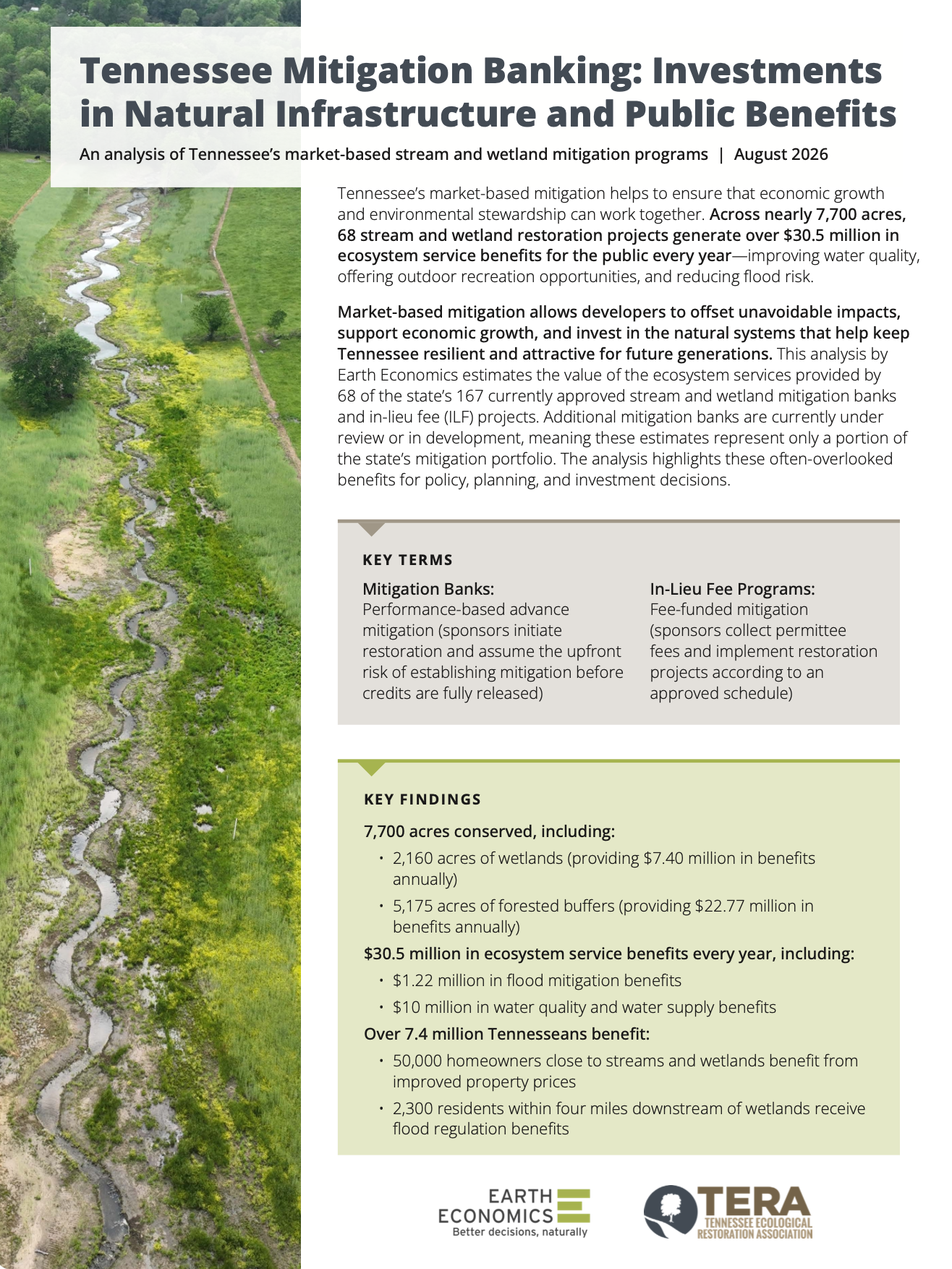
Mitigation Banking Generates Millions in Public Benefits
Economic growth and conservation are often framed as competing priorities. Market-based mitigation offers compromise, allowing development, while restoring and protecting critical streams and wetlands.
At a time when states are reevaluating their wetland policies in the wake of the Sackett v. EPA decision, our analysis of Tennessee’s mitigation banks highlights the substantial public benefits these projects generate across Tennessee.
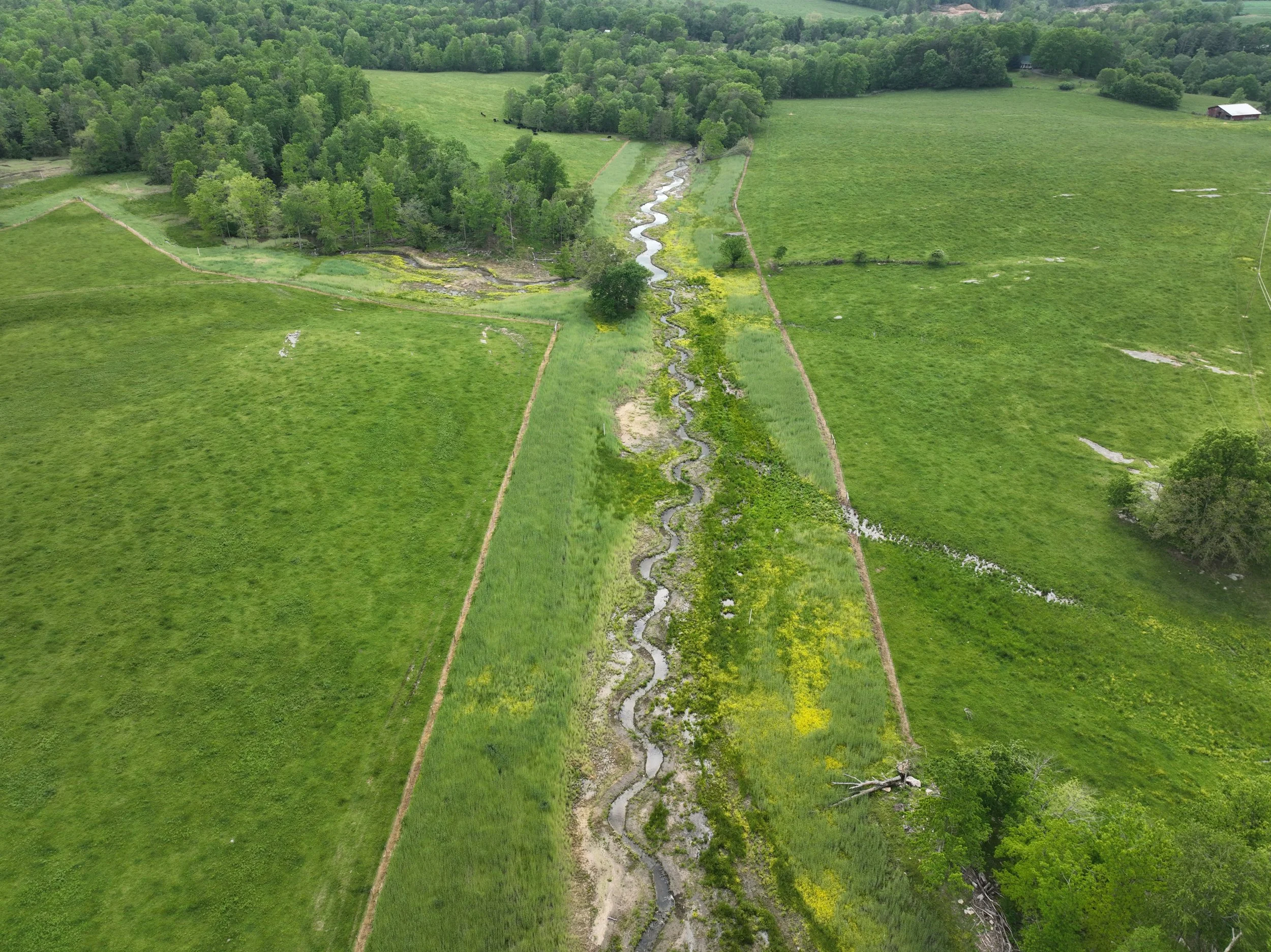
High Hood Mitigation Bank, Cumberland County, TN, courtesy of TERA.
Mitigation banks as a solution for Tennessee
Mitigation banking is a market-based conservation tool to restore, enhance, and permanently protect streams and wetlands. Together with Tennessee’s in-lieu fee (ILF) program, it allows developers to offset unavoidable impacts by investing in landscape-scale restoration projects that provide long-term ecological and community benefits.
The Tennessee Ecological Restoration Association (TERA) promotes the responsible use and development of mitigation banking and other restoration tools to advance conservation, economic development, and the long-term stewardship of the state’s natural resources.
We partnered with TERA to quantify the broad ecosystem services benefits from mitigation banking and ILF projects.
Key findings
Tennessee’s mitigation banks and ILF projects demonstrate that economic development and environmental stewardship can work together, allowing growth to proceed while restoring and protecting streams and wetlands.
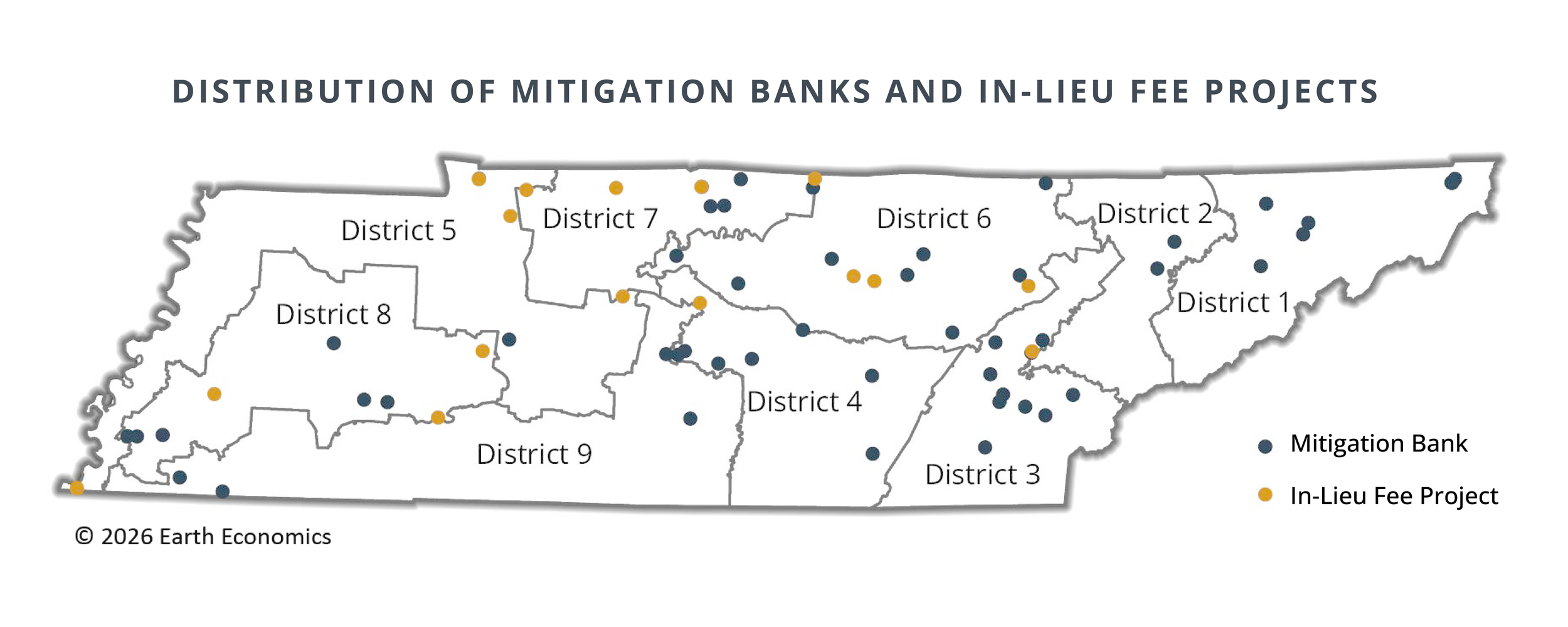
We found that 68 projects protect nearly 7,700 acres of wetlands and streams, generating more than $30.5 million in annual ecosystem service benefits for Tennessee communities.
Such public benefits are significant and widespread, from flood mitigation and water quality improvements, to groundwater recharge.
Protecting and restoring these habitats also supports community identity, outdoor traditions, property values, and long-term resilience.
These findings are conservative—they represent just a portion of Tennessee’s total mitigation portfolio—there are many more active, pending, and planned projects.
The future for conservation and development
Many of the benefits provided by healthy ecosystems are often missing in conventional economic accounting. Yet we know that wetlands and streams can reduce flood risk while restoring groundwater. By quantifying and framing these benefits in economic terms, this analysis helps make them visible in policy, planning, and investment decisions.
The findings also demonstrate that restoration and development can be mutually supportive goals. Tennessee's mitigation programs provide a framework for restoring aquatic resources while supporting continued economic growth, infrastructure investment, and community development.
As states revisit wetland policy and management, quantifying the benefits provided by wetlands can support better-informed decisions to steward—and invest in—the natural systems that provide a foundation for community resilience and well-being.
Download the report
Please fill out the form below to access the project report.
Your information will be kept confidential, and we will never share or sell it to third parties.